

deepwater horizon
2025
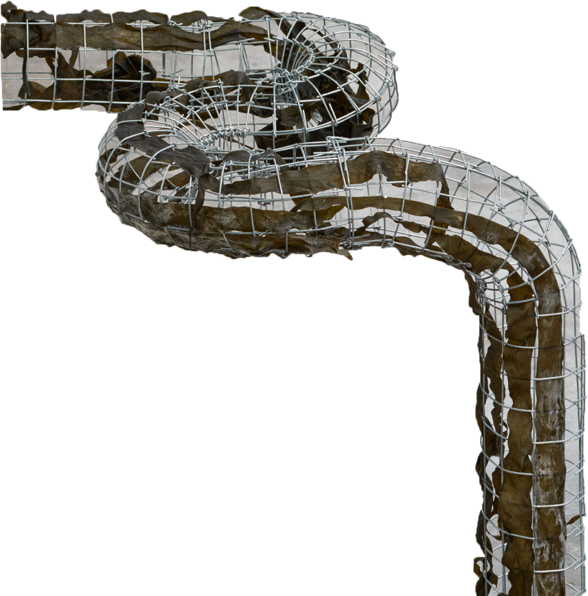
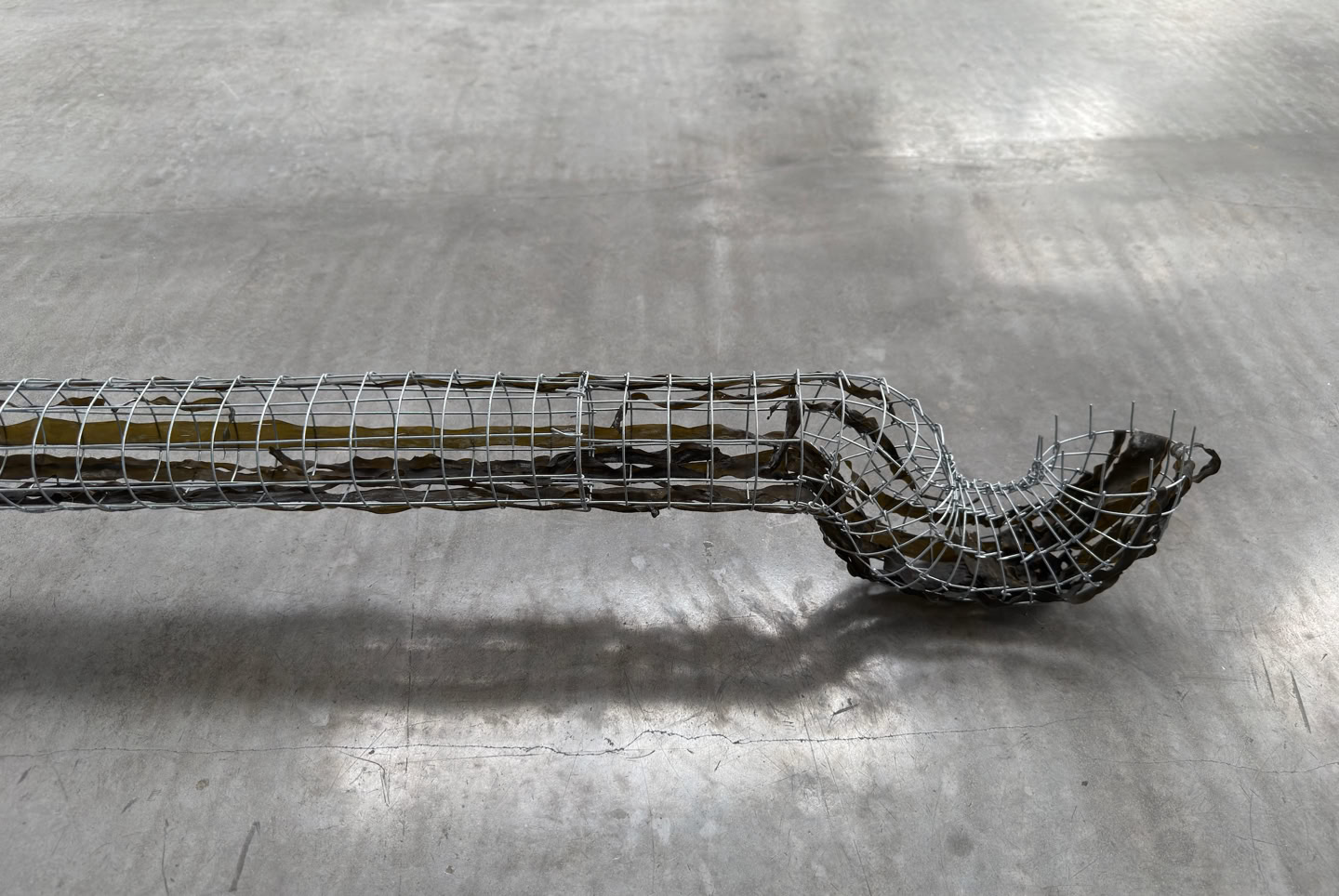
multimedia installation based on wire grid and seaweed
dimensions variable
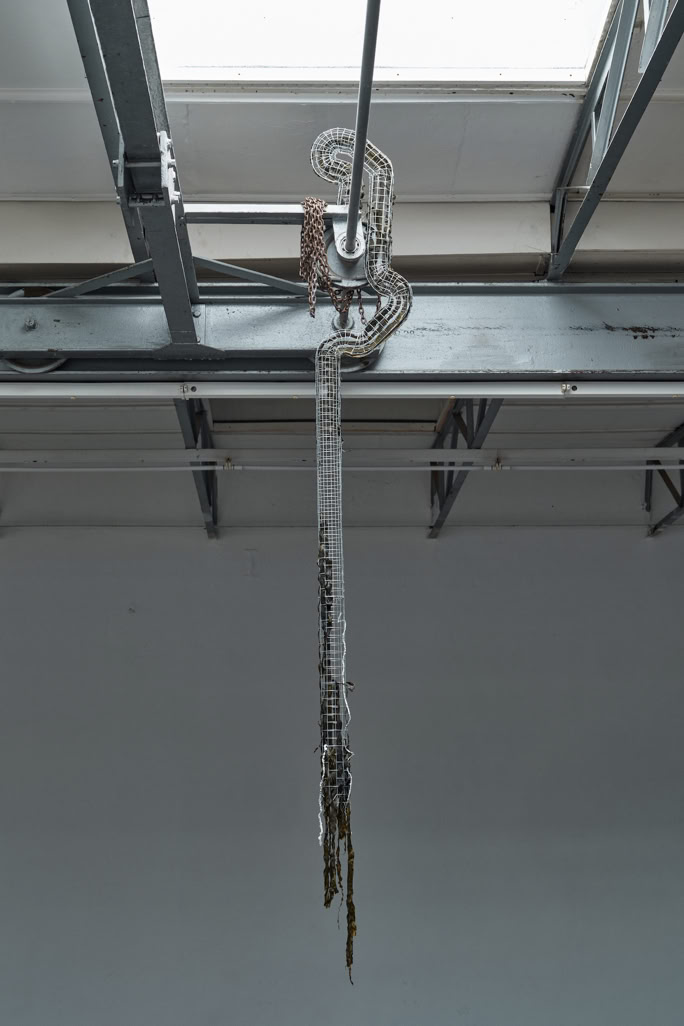
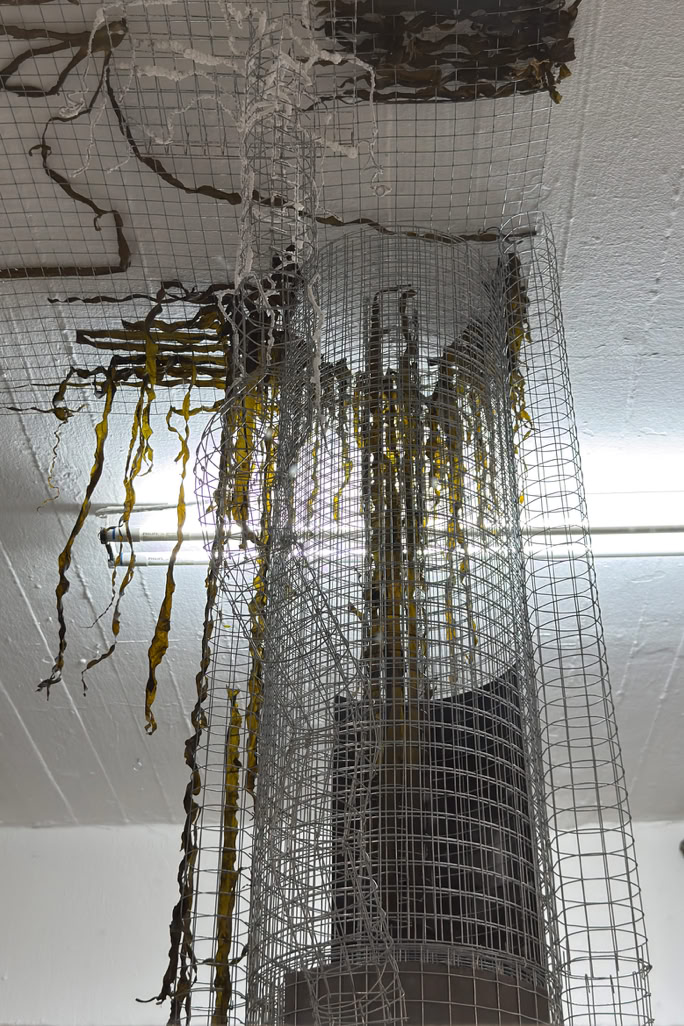
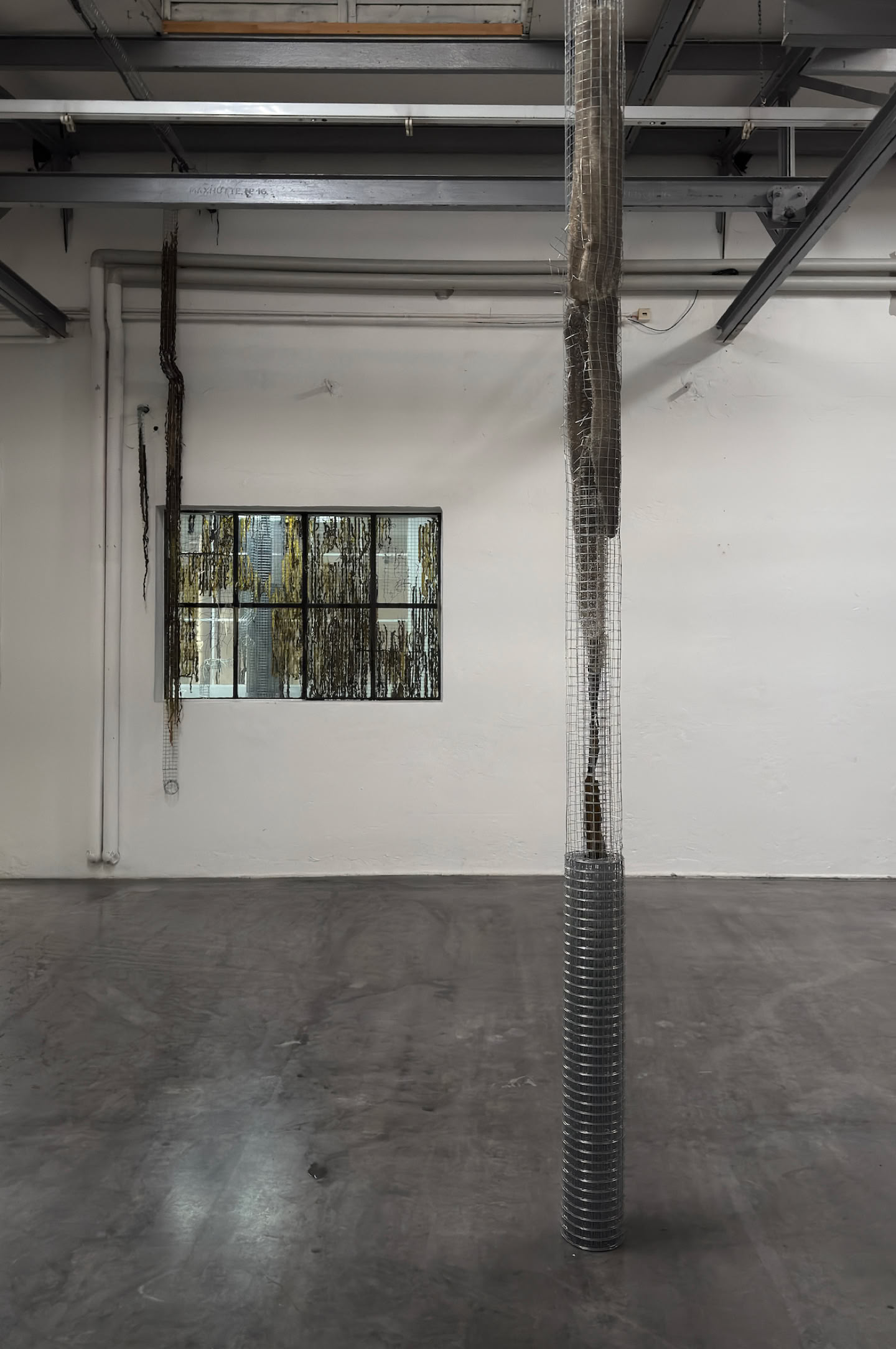
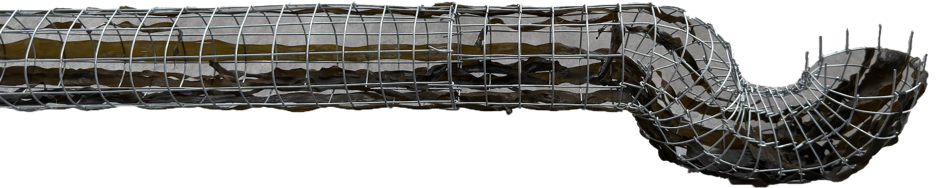
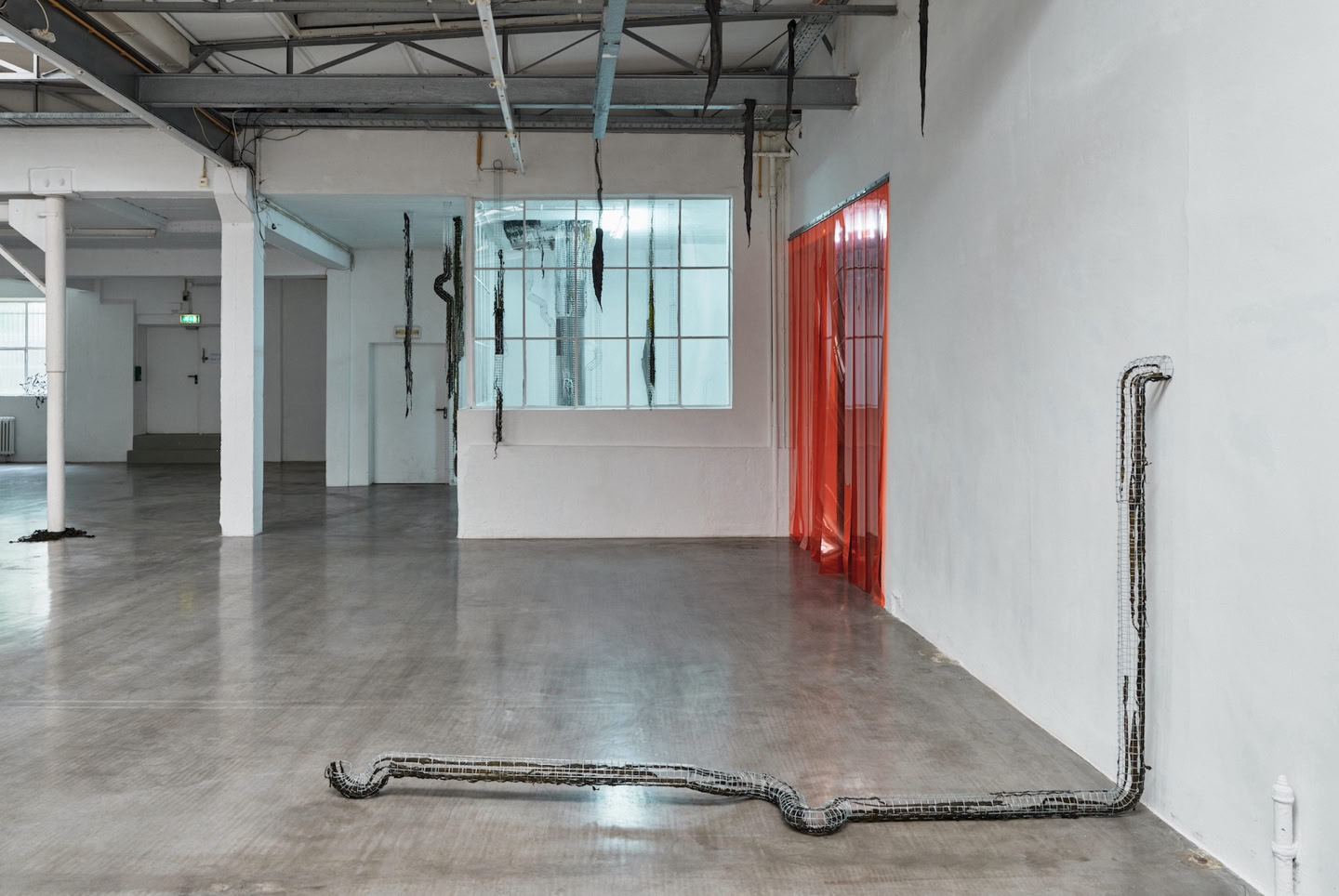
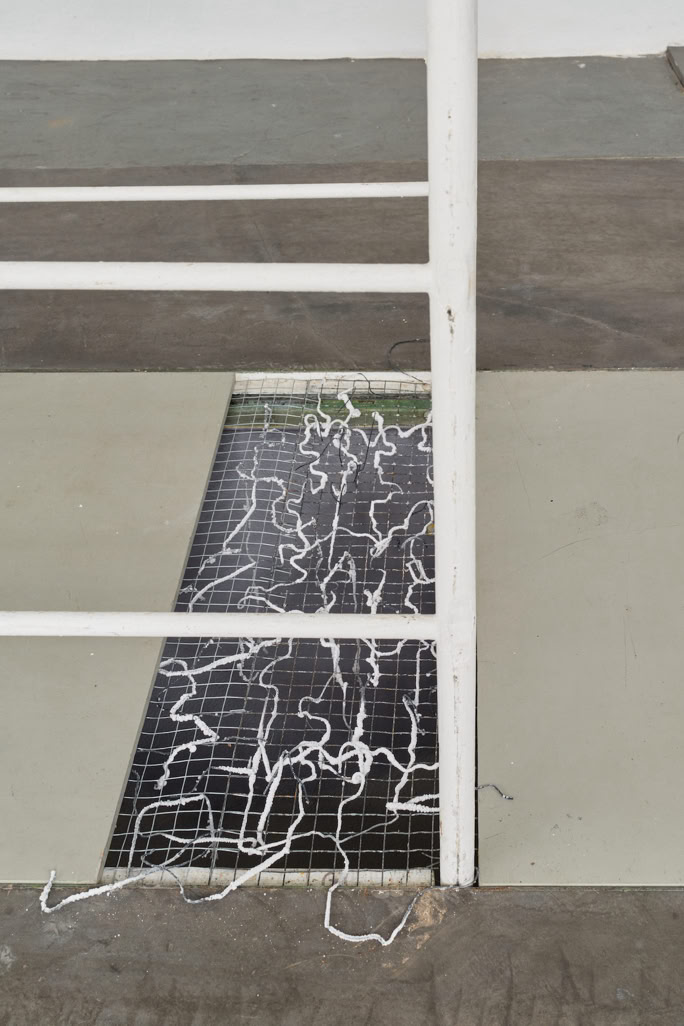
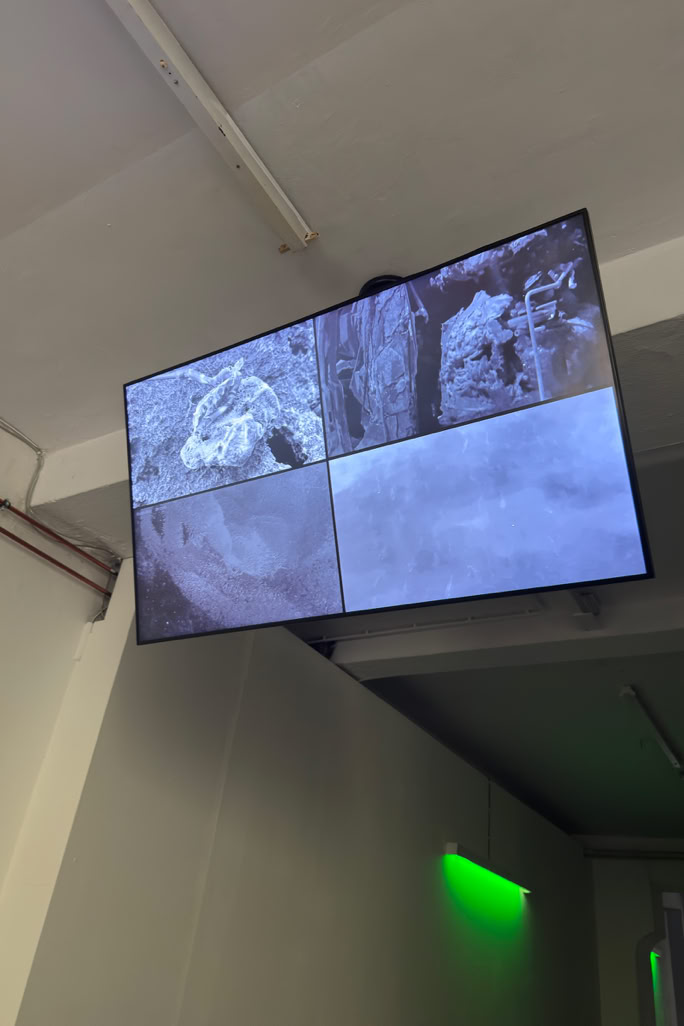
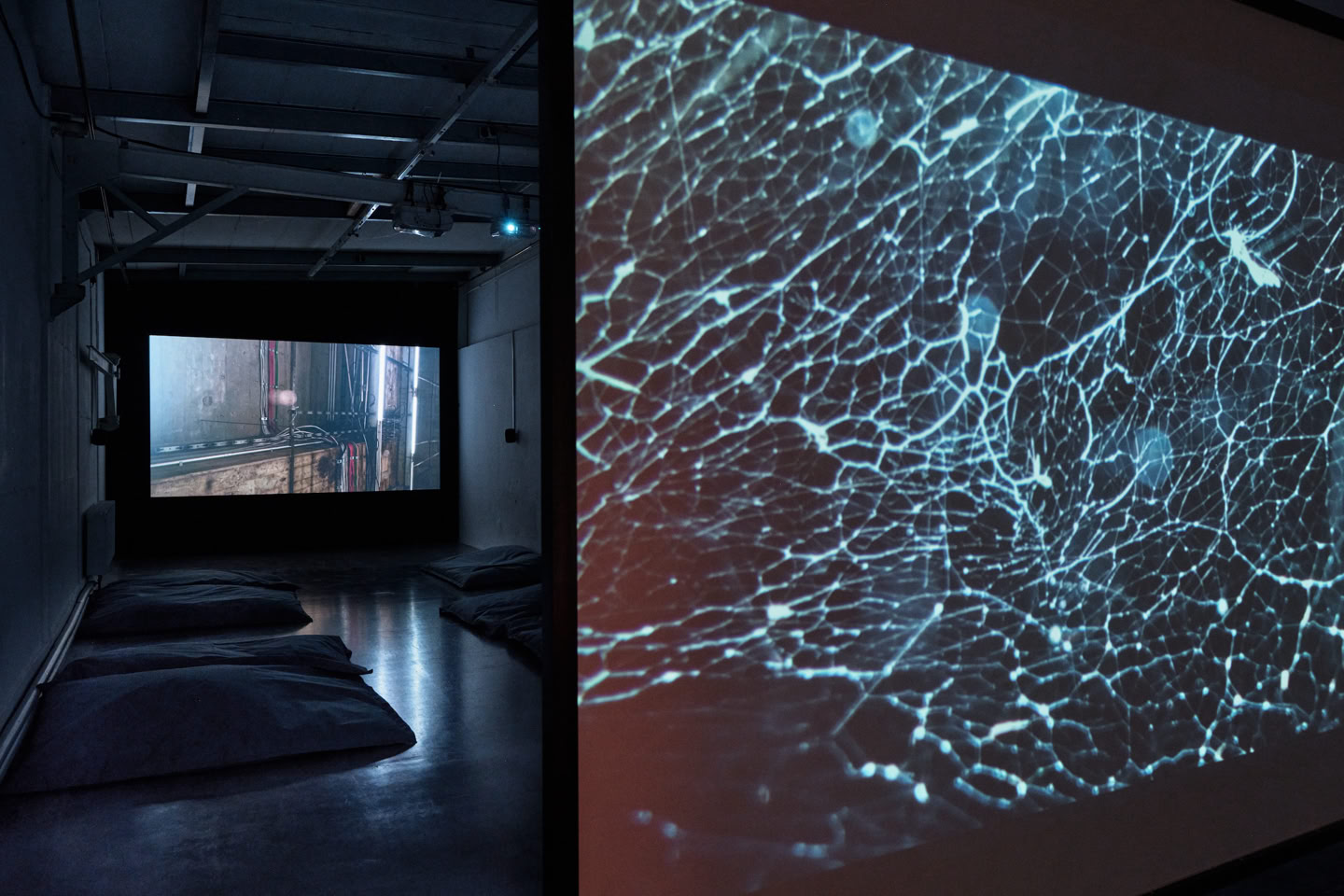
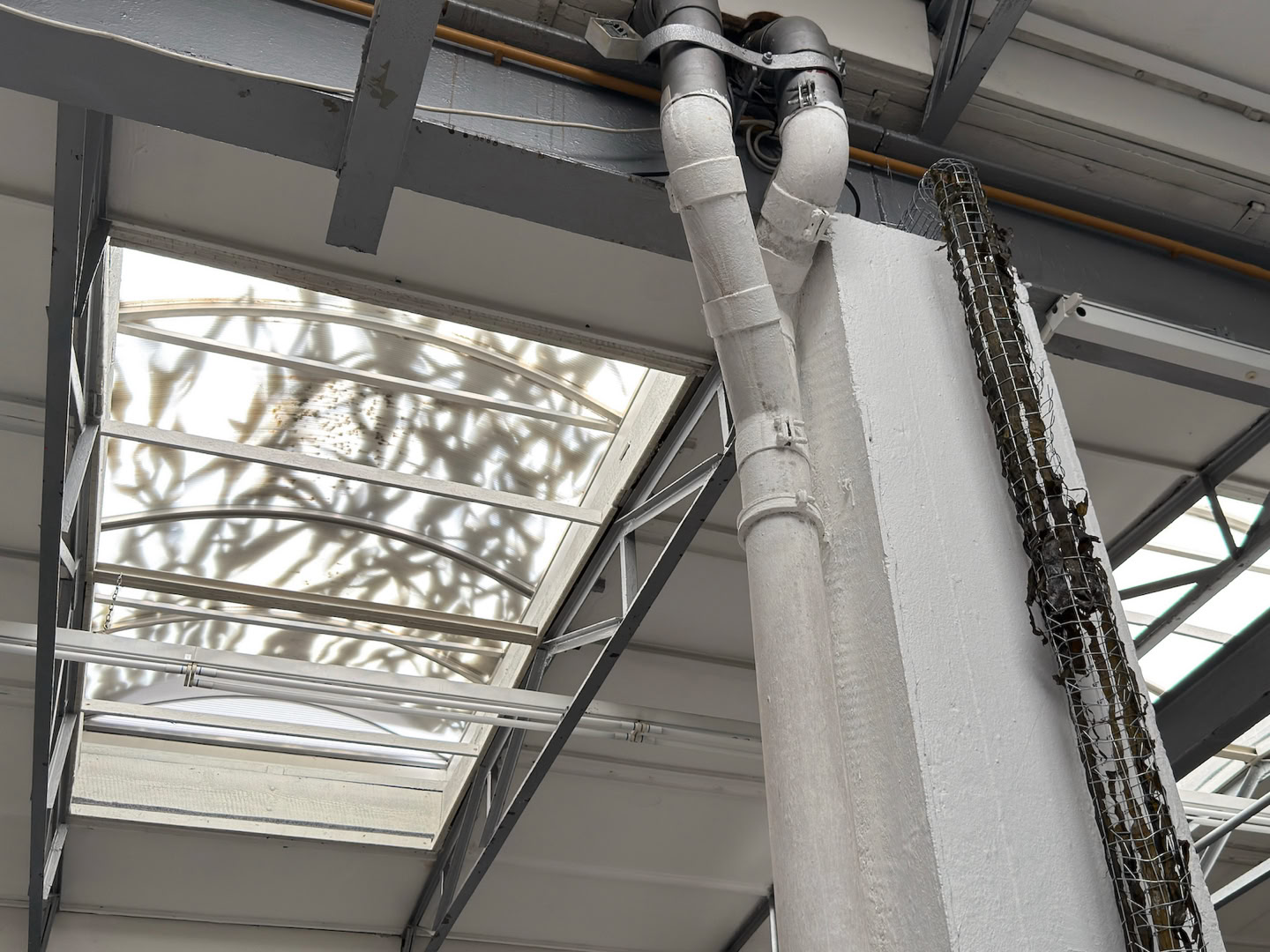
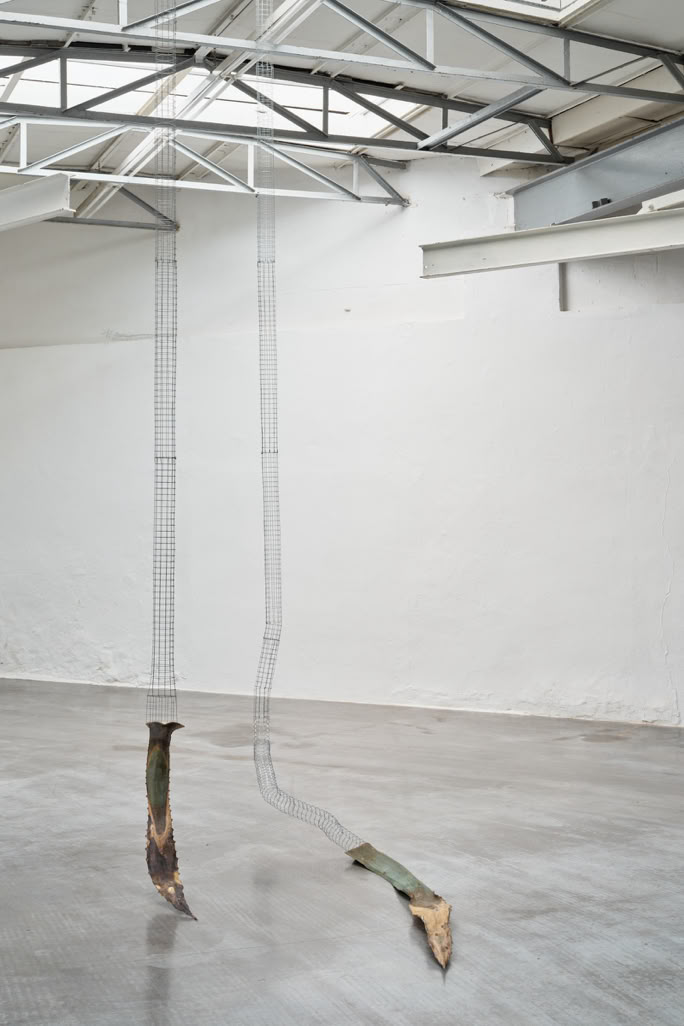
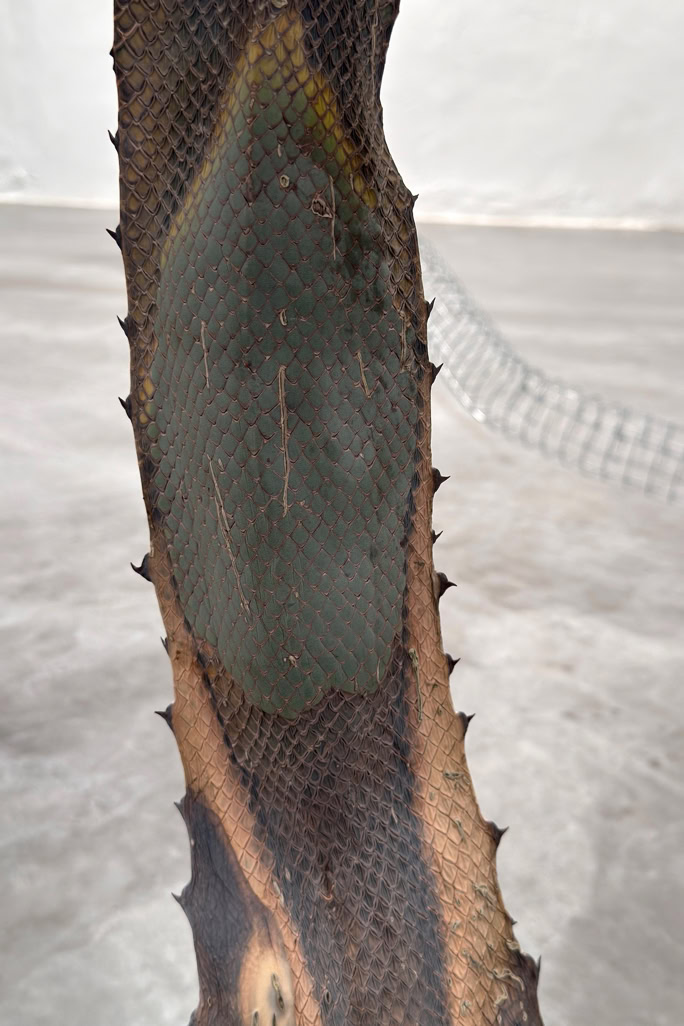
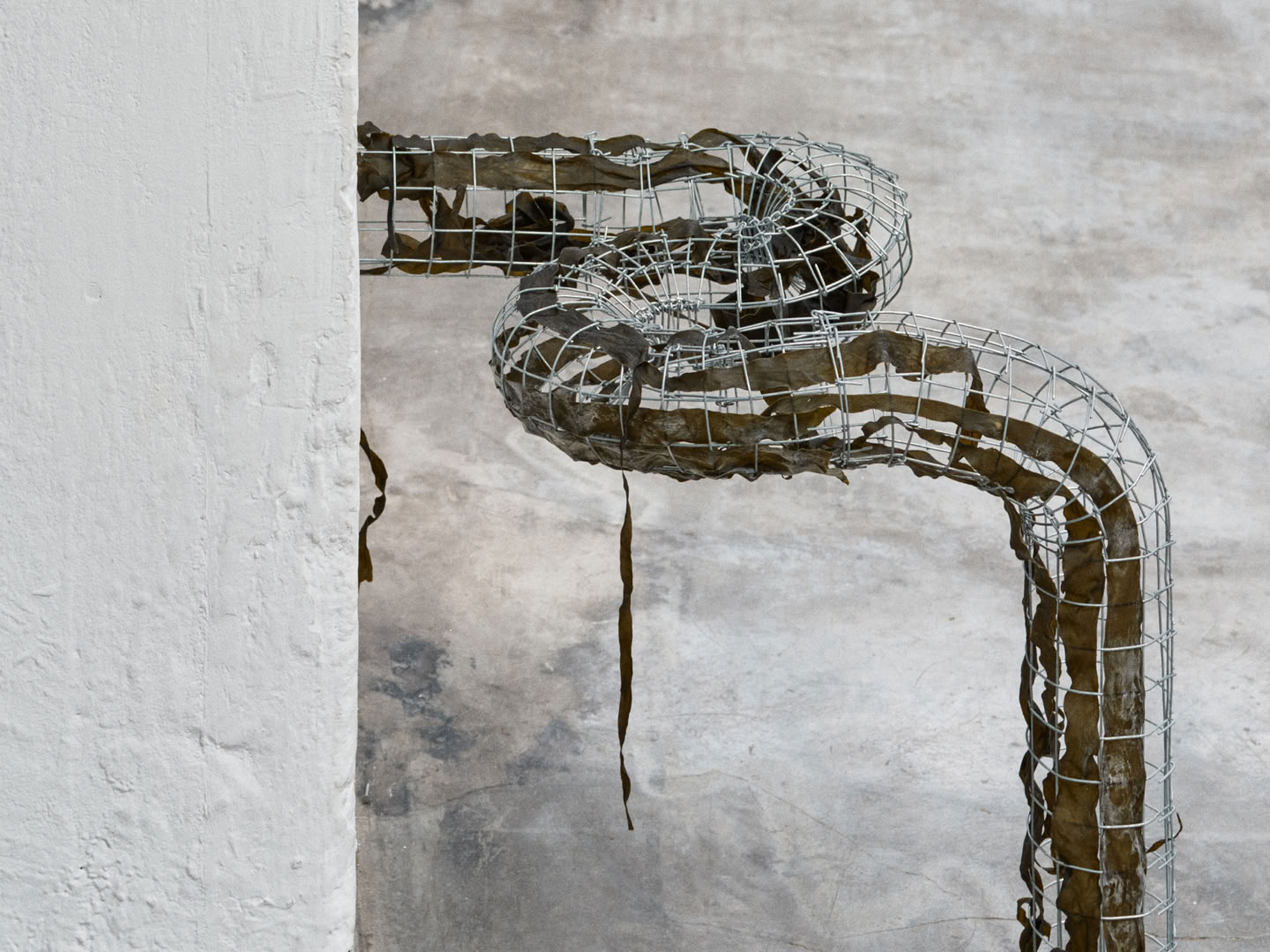
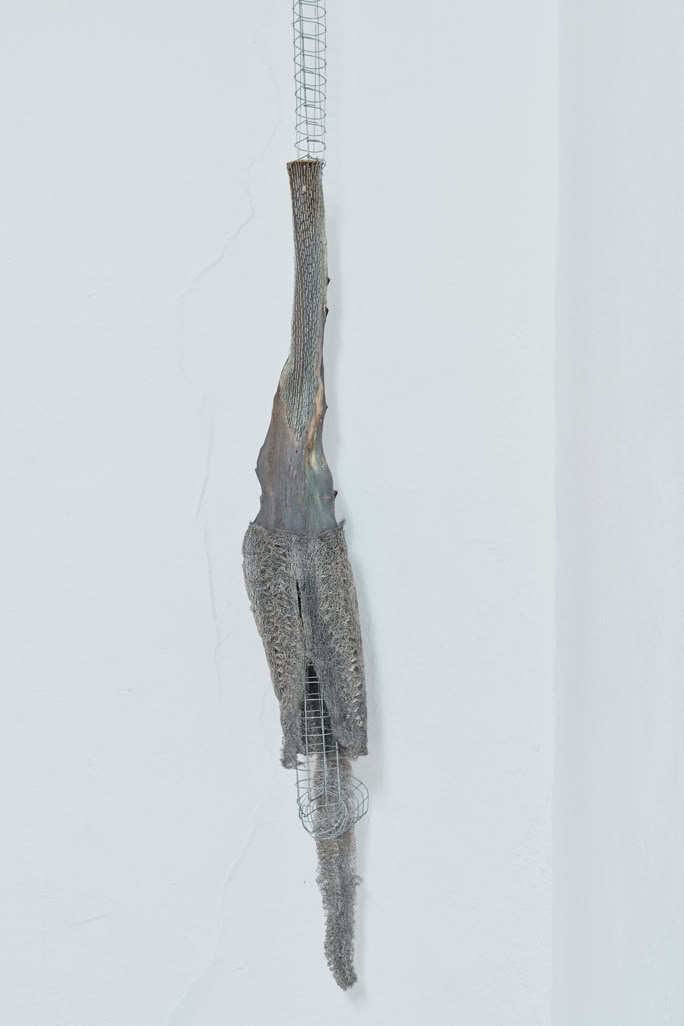
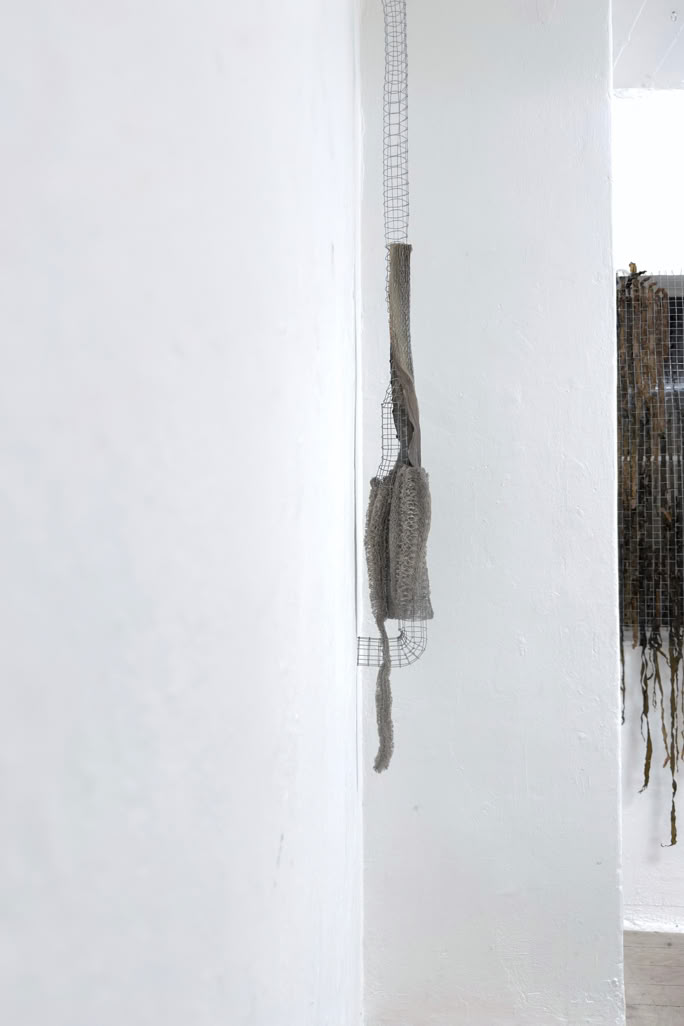
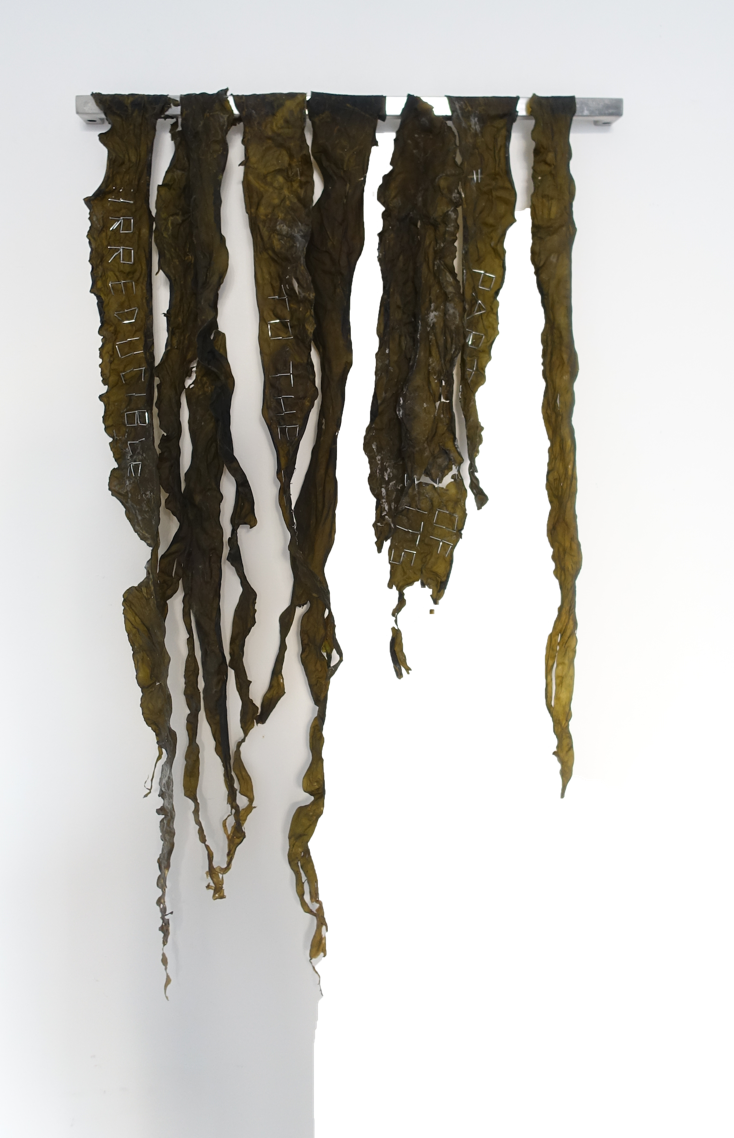
Maxine Weiss’s evolving installation Deepwater Horizon unfolds like a parasitic organism within the industrial architecture of Lothringer 13 Halle. It clings to beams and pipes, infiltrates walls, and winds its way through the building’s infrastructure—and at times, even through the other works within it. Composed of metal grids, industrial materials, kelp-like forms and actual algae, the installation grows, mutates, and sprawls—suggesting both contamination and emergence, collapse and rebirth.
The title refers to the Deepwater Horizon oil spill in 2010, one of the most catastrophic environmental disasters in recent history. A series of technical failures in a deep-sea pumping system led to the release of nearly five million barrels of crude oil into the Gulf of Mexico. Weiss references this event not simply as an act of remembrance, but as a point of departure for an embodied, speculative fiction: What if the catastrophe not only destroyed, but also birthed something new? A parasite that grows from the wreckage, testing out new hybrid forms that are simultaneously organic and synthetic.
Built from pliable wire mesh, readable both as an architectural skeleton and as a global ordering system, the installation references the structural grids humans have imposed onto the world: maps, data, networks of extraction and control. Yet here, the grid is unstable. It dissolves. Salt and algae infiltrate it. Organisms begin to grow through and around it. The work stages a confrontation between structural rigidity and ecological adaptability. Brown algae plays both a real and symbolic role. Simultaneously exploited in biotech and food industries and celebrated for its role in carbon sequestration, kelp becomes a figure for the ambiguous entanglement of life and capital.
For Weiss, Deepwater Horizon is not a fixed sculpture but a living, adaptive presence. Installed over several months, it responds directly to the spatial, material, and atmospheric conditions of the former machine hall. It is shaped by the rhythms of the building, its smells, its scars, and its lingering industrial residue. The work engages with time not as a linear sequence but as sedimentation—layered and porous. There are echoes of deep-sea cables or a speculative submarine, drifting between memory and fiction, ruin and recovery.
Crucially, the parasite, which is often perceived as a threat, emerges here as a metaphor for transformation. It infiltrates systems, not to destroy them outright, but to repurpose and reimagine them. It is not always clear who is the host and who is the parasite. In this ambiguity lies hope: an invitation to unlearn extractivist logics and to imagine new forms of cohabitation. In this sense, Weiss’ installation is both a warning and a proposition. It visualises a possible ecology of interdependence, shaped by fragility, mutation, and resistance.
Developed as part of Lothringer 13 Halle’s open-ended, process-based residency FORECAST, Deepwater Horizon eschews the rigidity of the pre-planned solo show. It grew slowly, organically, through presence, rehearsal, and improvisation—aligned with Weiss’ preference for embodied making over digital simulation. The result is a work that could only exist here, now, in this place and in this time. It is a residue, a symptom, and perhaps even a prototype of what emerges after collapse.
There is no evolution without parasites, but there is no parasite without a host. In this precarious interdependence, Weiss stages a fragile ecology of breakdown and becoming.
Text: Kalas Liebfried
Installation view „Deepwater Horizon“, Lothringer 13, Munich, 2025
photos: Christian Kain, mw

related works